

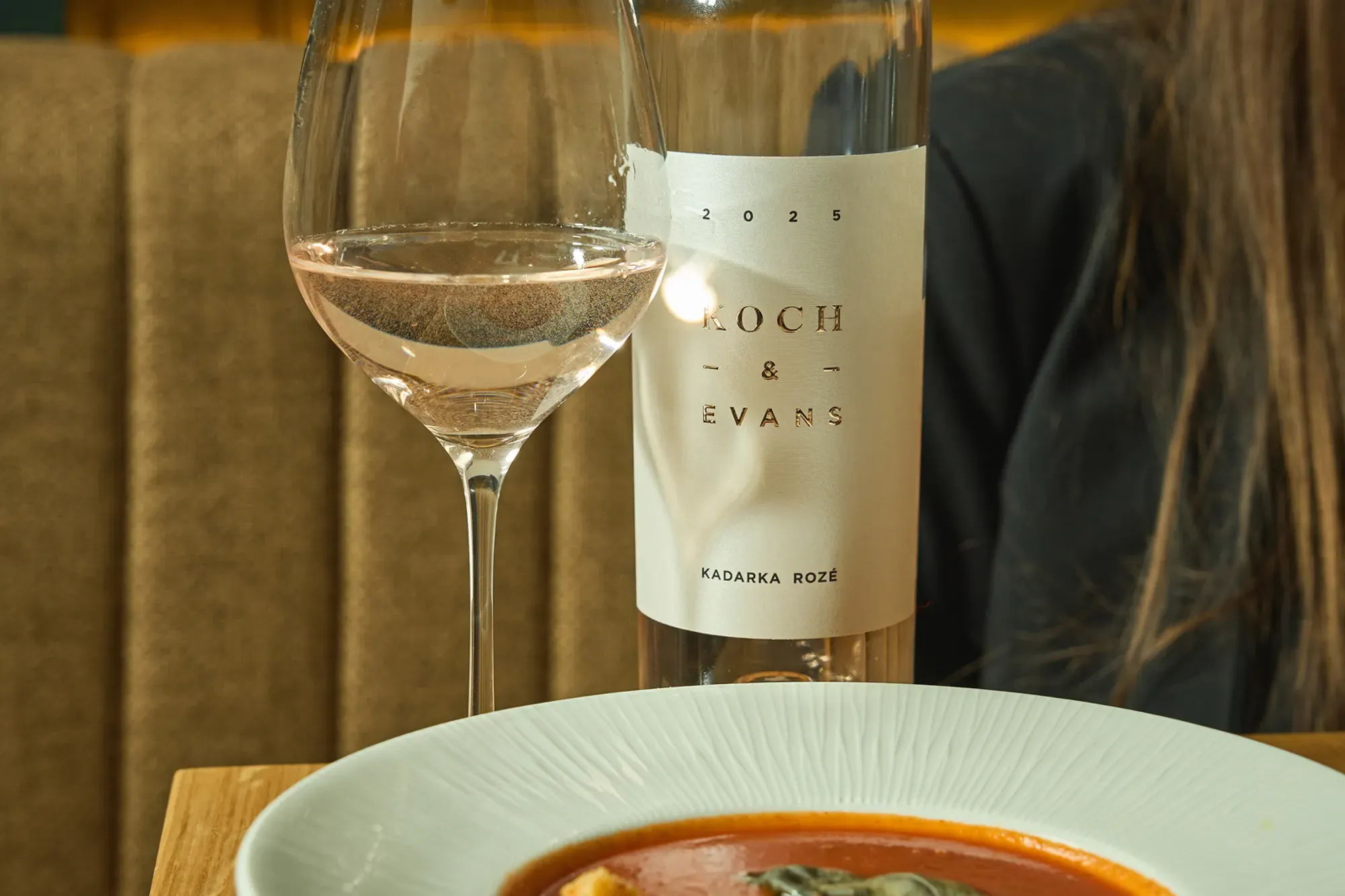
Dishes recommended with Kadarka by restaurants, sommeliers and Kadarka enthusiasts. We’d love to hear from you with more recipes or short food descriptions! info@hungarianwines.eu
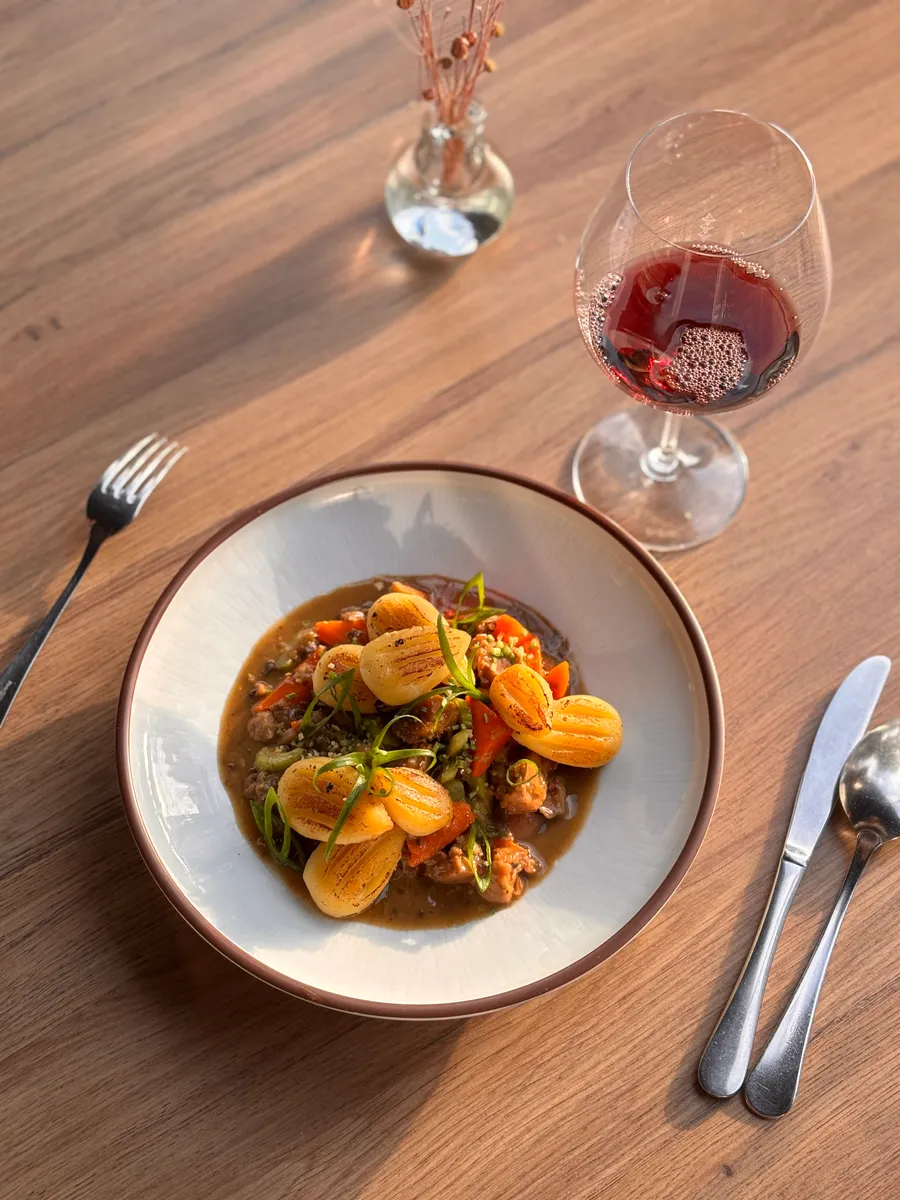
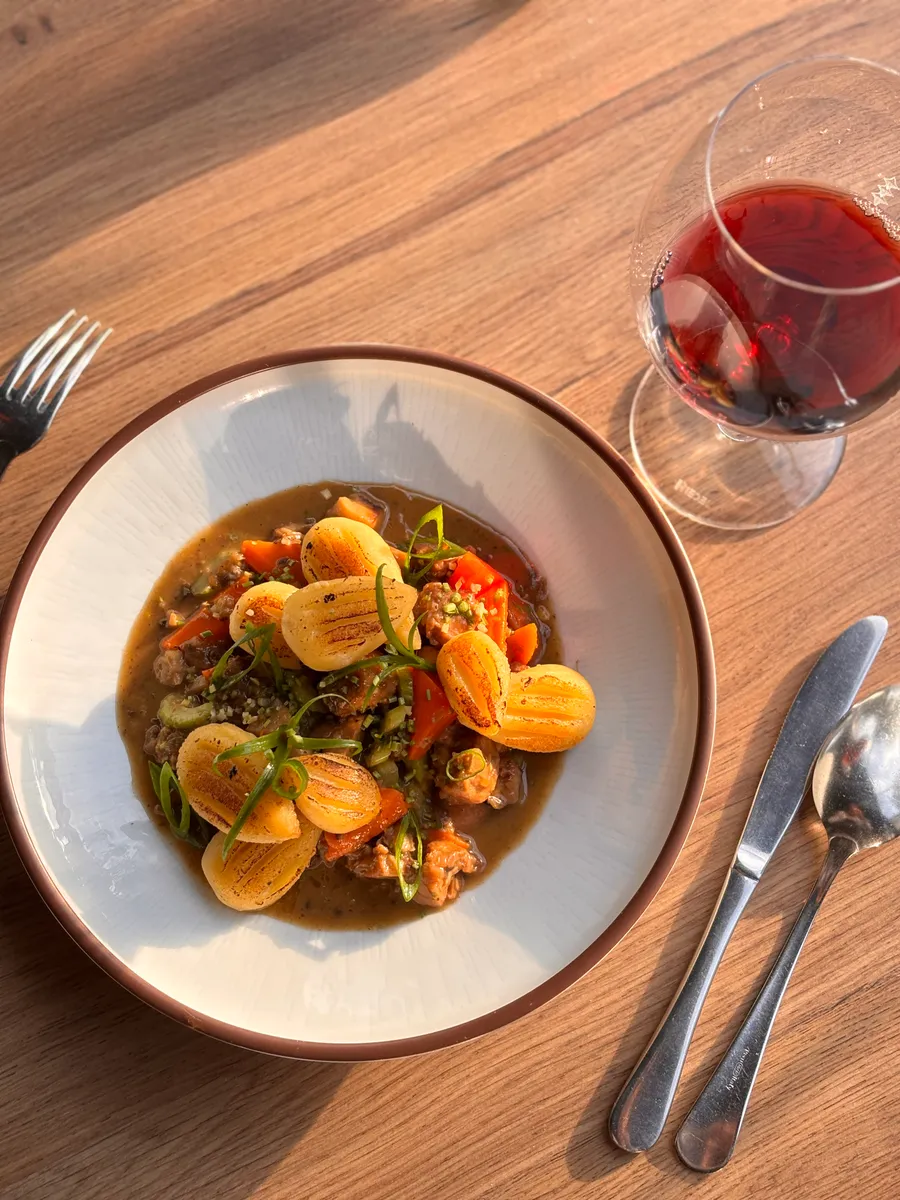
Rabbit ragout with porcini mushrooms, served with crispy buckwheat and “dödölle”
Kistücsök Restaurant, Balatonszemes
Fry finely chopped onion and garlic in fat until softened. Add white wine and allow it to reduce. Add the diced rabbit meat. Simmer until tender, then add the chopped carrots, porcini mushrooms and celery stalks.
Season with salt, pepper and fresh herbs (thyme, savory, sage, fresh chives). Enrich with butter or brown butter. Serve with fried potato dumplings as a side dish.
Ingredients for 1 portion: 20 g fat, 40 g onion, 5 g garlic, 3 cl white wine, 180 g rabbit meat, 40 g carrot, 5 dl stock, 30 g celery stalk, 50 g porcini mushrooms, 20 g butter, salt, pepper, fresh herbs to taste. For the potato dumplings (dödölle): 80 g potatoes, 20 g flour, salt.
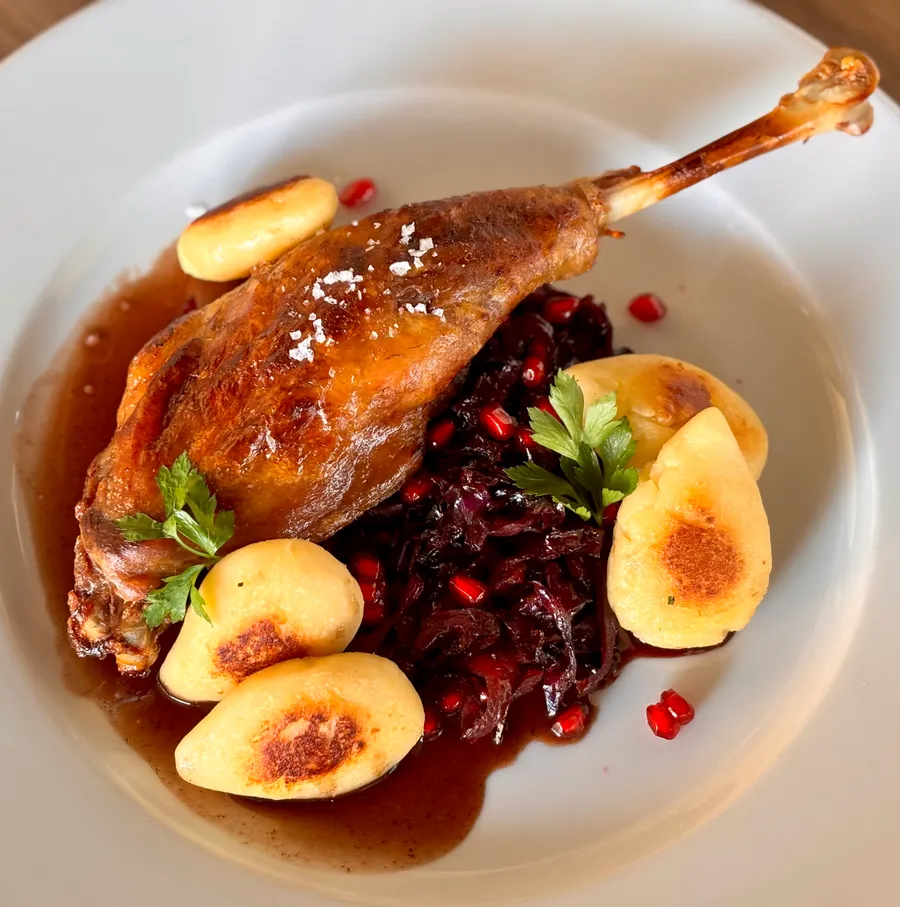
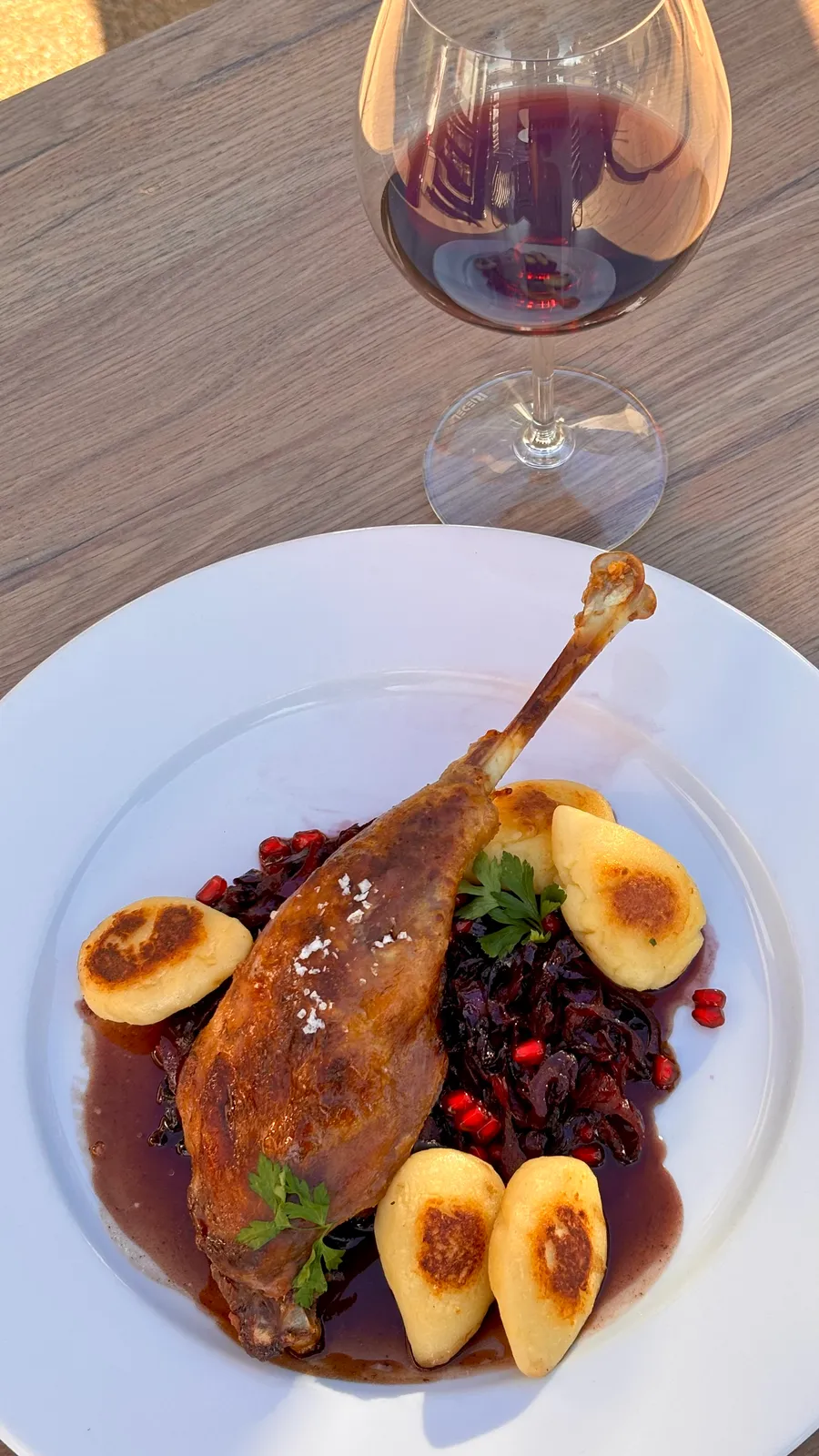
Goose leg with pomegranate and red cabbage, served with “dödölle”
Kistücsök Restaurant, Balatonszemes
Place the goose leg in a 10 per cent brine and leave to rest in the fridge for 4–6 hours. Then cook in goose fat (enough to cover the leg) at 75–80 degrees Celsius until tender. This takes approximately 12–14 hours. Roast in a hot oven at 220 degrees for 10 minutes until the skin is crispy. Grate the red cabbage, season with salt and squeeze out the excess liquid. Sauté in caramelised sugar, preferably with a red wine that is high in acidity. Season with finely ground pepper and pomegranate seeds. Fry the “dödölle” in a hot cast-iron pan with goose fat until crispy.
Ingredients for 1 portion: 500 g goose legs, goose fat (enough to cover the legs), 10 g granulated sugar, 150 g red cabbage, 0.1 pomegranate, 5 cl red wine, cooking oil, salt, pepper (to taste).
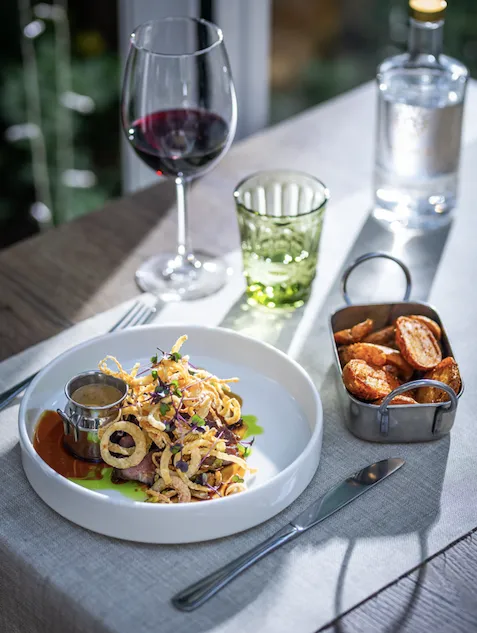
Grilled flank steak with onions – flank steak with embers-roasted potatoes, Lyon-style onions and green pepper sauce
Jardinette restaurant, Budapest
Ingredients
- For the steak: 800 g flank steak, 2 tbsp olive oil, 30 g butter, 2 cloves of garlic, 2 sprigs of thyme, salt, freshly ground black pepper
- For the embers-roasted potatoes: 800 g small potatoes, 2 tbsp olive oil, 30 g butter, 2 cloves of garlic, salt, fresh thyme
- For the Lyon-style onions: 3 large onions, 3 tbsp plain flour, oil for frying, salt
- For the green peppercorn sauce: 1 small shallot, 1 tbsp butter, 2 tbsp green peppercorns, 50 ml brandy or cognac, 150 ml beef stock, 150 ml double cream, 1 tsp Dijon mustard, salt
Method
Pre-cook the potatoes in their skins in salted water, then drain them. Toss them with olive oil, butter, garlic and thyme, and roast in an oven at 200 °C for 20–25 minutes until golden brown and crispy.
For the Lyon-style onions, slice the onions into thin rings, season lightly with salt, coat in flour, then fry in plenty of hot oil until golden brown and crispy. Drain on kitchen paper.
For the sauce, soften the finely chopped shallots in butter, add the green peppercorns, then pour in the brandy. Bring back to the boil briefly, add the beef stock, and reduce by about half. Pour in the cream, add the Dijon mustard, then cook over a low heat until creamy. Season with salt to taste.
Remove the flank steak from the fridge at least 20–30 minutes before cooking. Pat dry, season with salt and pepper, and brush lightly with olive oil. Fry in a very hot frying pan for about 2–3 minutes on each side, then add the butter, garlic and thyme, and baste continuously with the foaming butter. For medium rare, remove from the heat when the core temperature reaches 52–54 °C and leave to rest for 5–8 minutes.
Always cut the rested flank steak into thin slices, against the grain. Serve with crispy embers-roasted potatoes and green pepper sauce, and finish with a generous helping of freshly fried Lyon onions.
Chef’s tip: Flank steak is a distinctive, heavily marbled cut of meat, so as well as resting it, it’s particularly important to slice it against the grain when serving – this is what makes it truly tender.
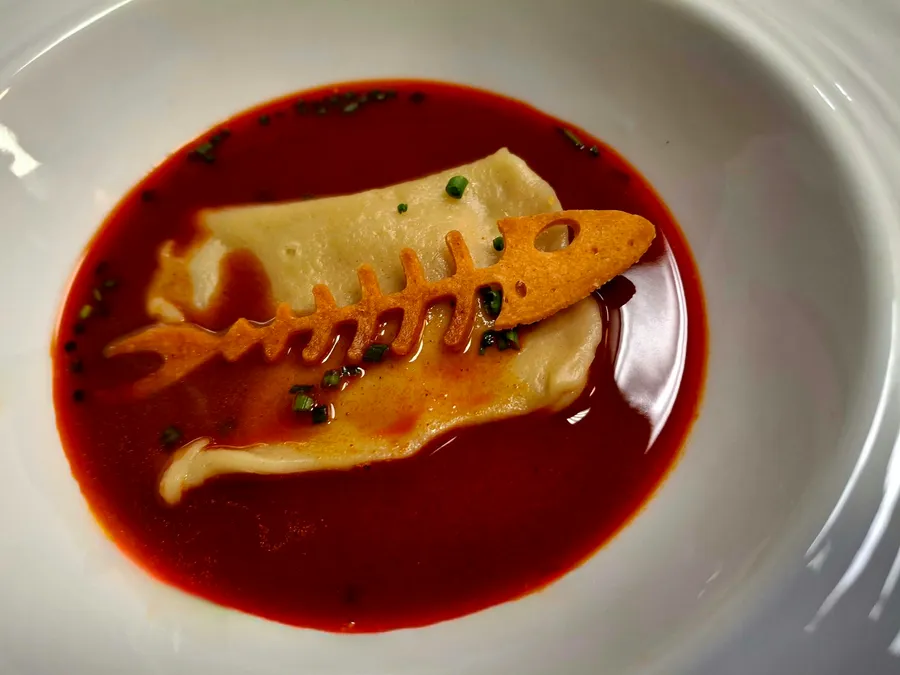
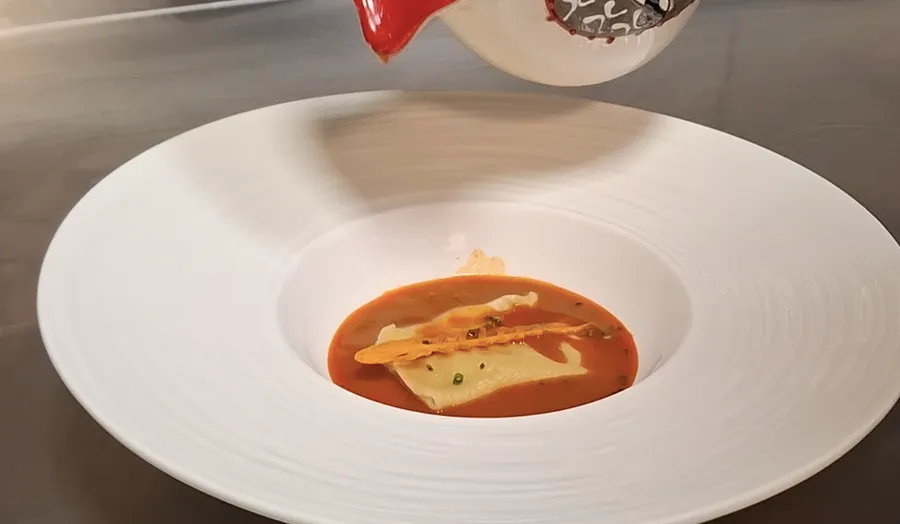
Catfish ravioli with fish soup consommé
Nova Restaurant, Szeged & Béla Vállai, sommelier
Béla Vállai from Debrecen is a master at devising food pairings; as soon as he tastes a wine, ideas sparkle in his mind, one thought following another. At a Heimann wine dinner, he devised these ravioli stuffed with catfish to accompany the Kadarka, served with a moderately thick consommé reminiscent of a blend of Baja and Szeged fish soup. Béla Vállai on the pairing: “The meeting of the food and the wine was as if they had been born just to please each other. For me, Kadarka is the spice of everyday life.”
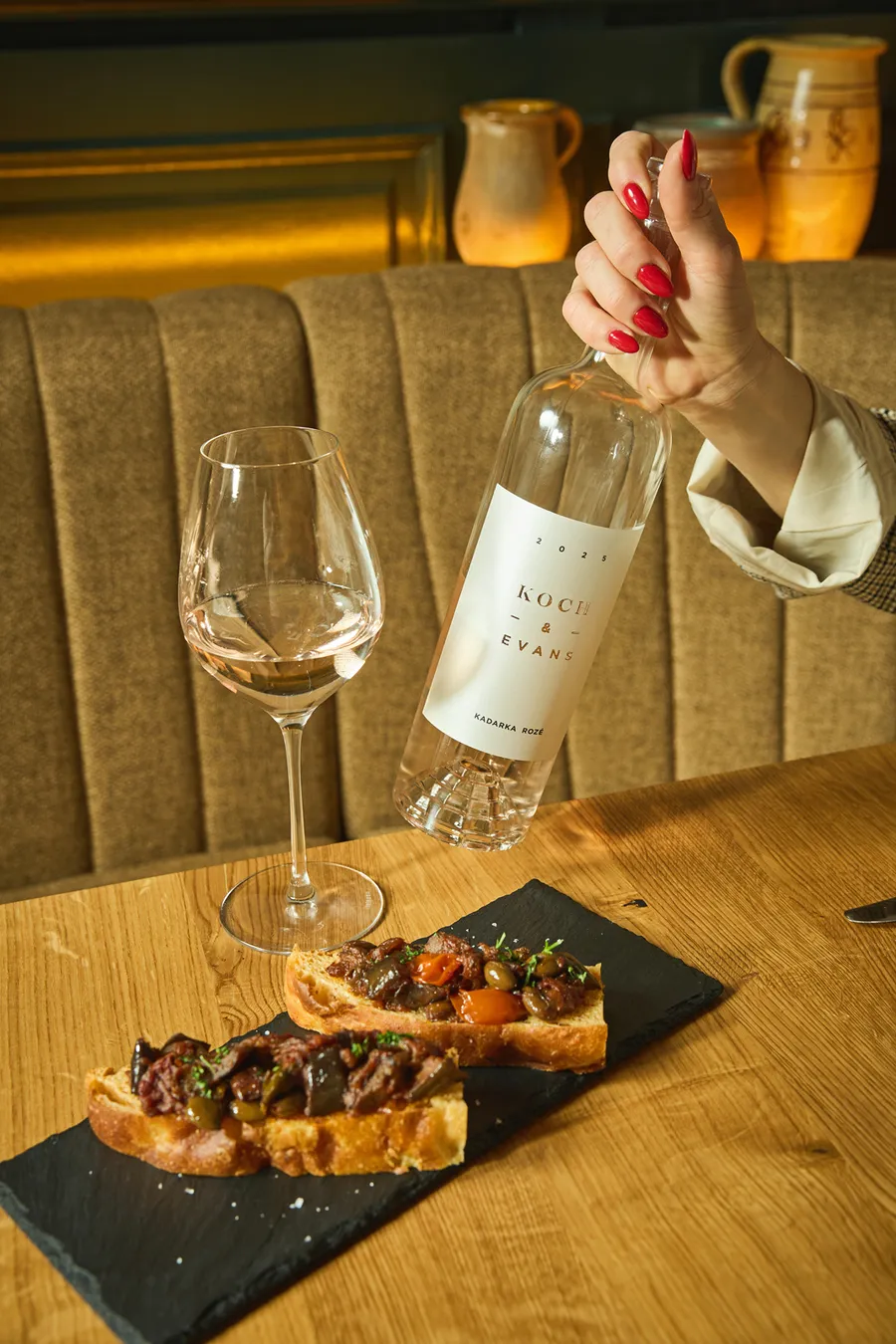
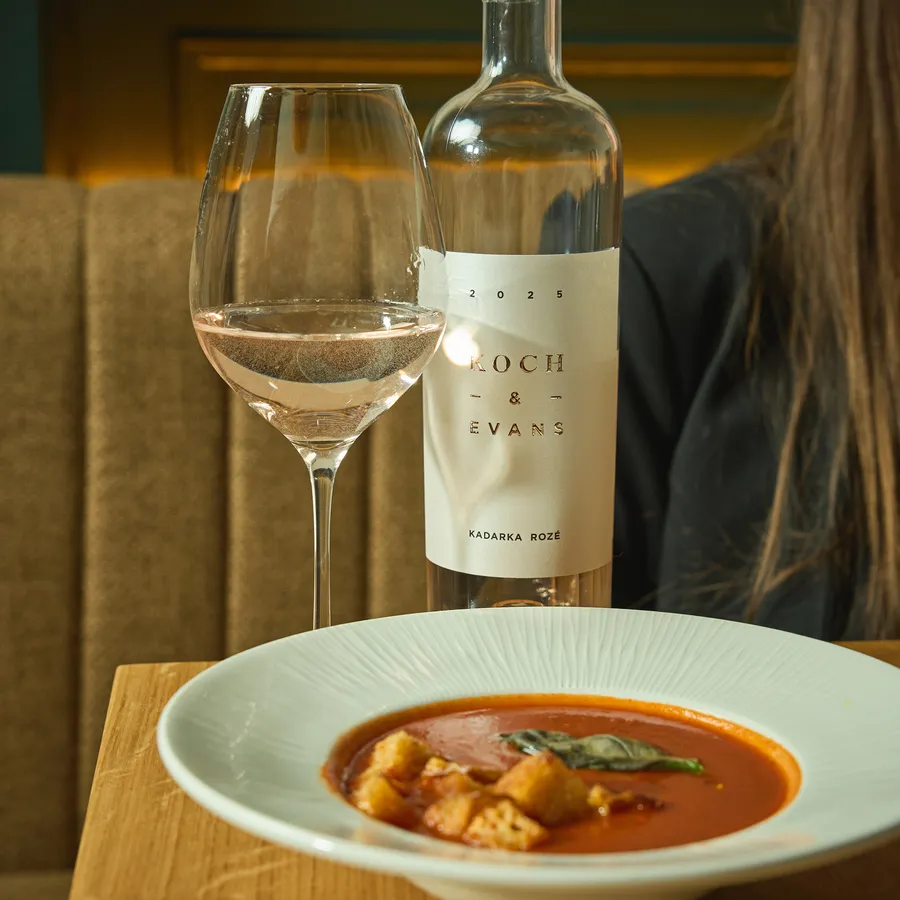
Italian tomato-based dishes
Giulia Restaurant, Budapest
As Pálma Koch of the Koch Winery (Hajós–Baja) put it, “the Koch & Evans rosé goes incredibly well with the tomato-based dishes at Giulia restaurant”, be it a fish dish with tomato sauce or bruschetta with sun-dried tomatoes.
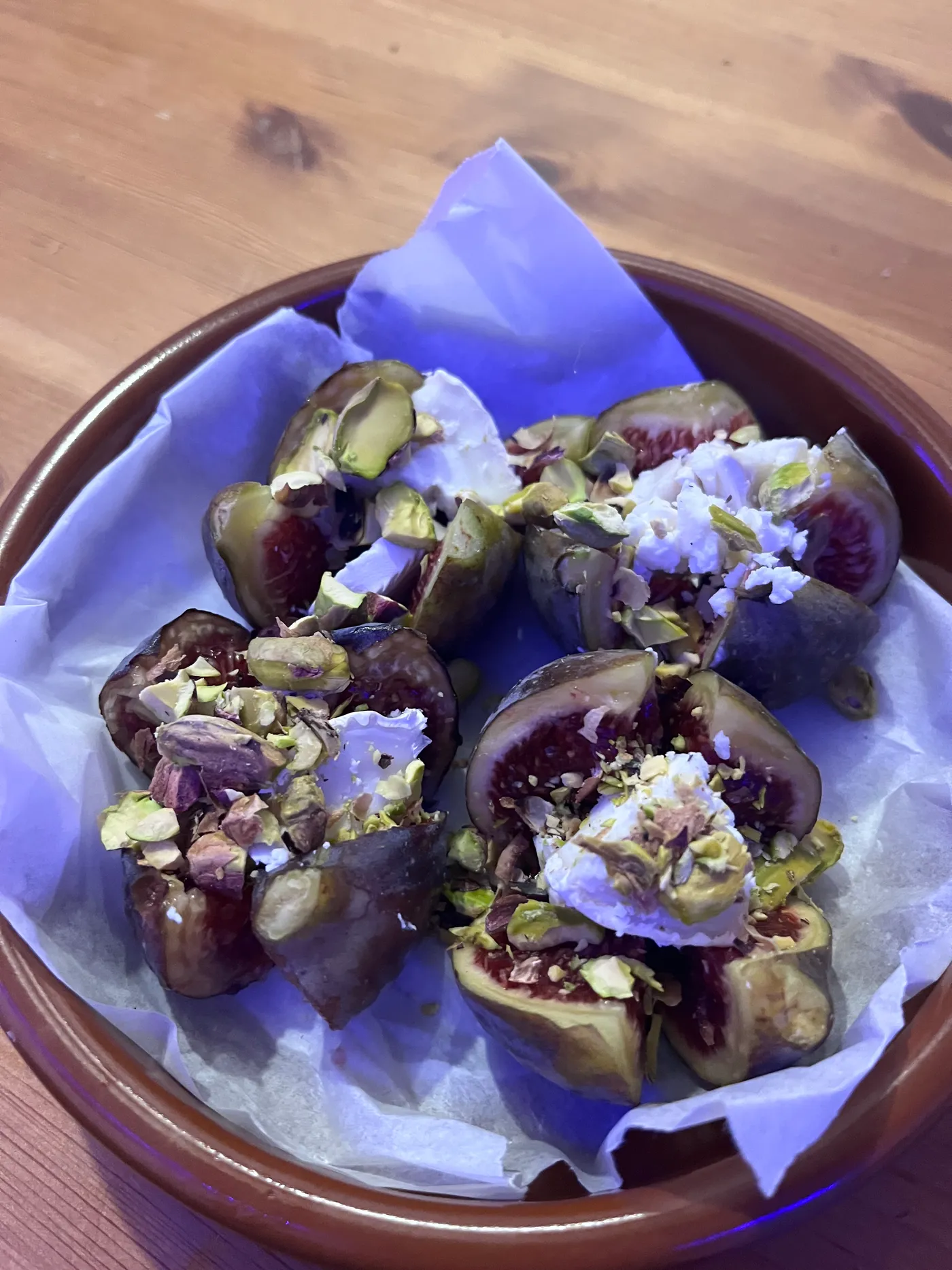
Figs with goat’s cheese
Gyöngyi Fellegi, a Kadarka enthusiast
This year, we also asked Kadarka enthusiasts what easy-to-make nibbles they would recommend to go with Kadarka. This delicacy was sent in by Gyöngyi Fellegi from Miskolc. “Figs with goat’s cheese and pistachios. I simply sprinkled the sliced figs with cheese and crushed pistachios, then popped them in the oven for 15 minutes. The tangy figs and salty cheese went brilliantly with the fruity Kadarka!”
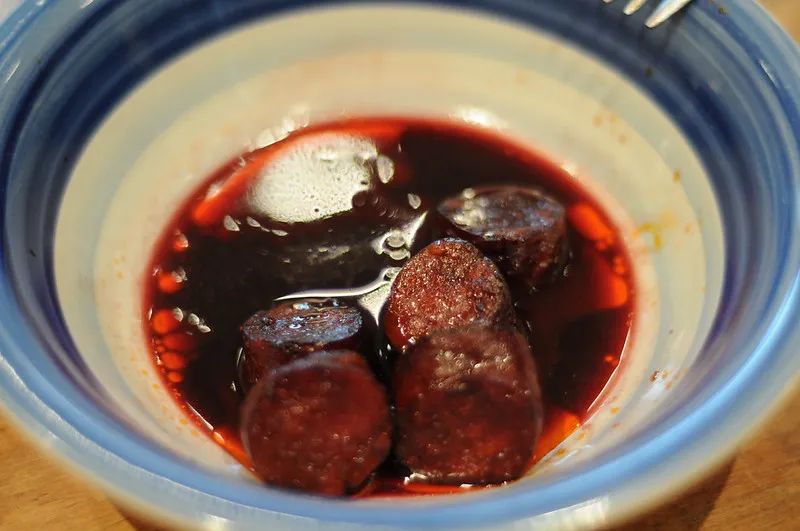
Sausage with Kadarka
Ágnes Németh, a Kadarka enthusiast
The creator of Kadarka Day is Ágnes Németh, who currently lives in Spain, but fortunately she always has lovely Hungarian guests visiting her, so she has no shortage of Hungarian wines and dishes. One of the most typical Spanish tapas is chorizo (Spanish sausage) braised in Tempranillo wine, which is where the idea for Gyulai sausage braised in Kadarka came from. It works! The only thing to bear in mind is to give it time: let the sliced sausage soak in the wine for hours, then simmer it over a low heat for hours until almost all the wine has evaporated (you’ll need a bottle for a pair of sausages).